Venezuela: Some buildings fell, some didn't: Why?

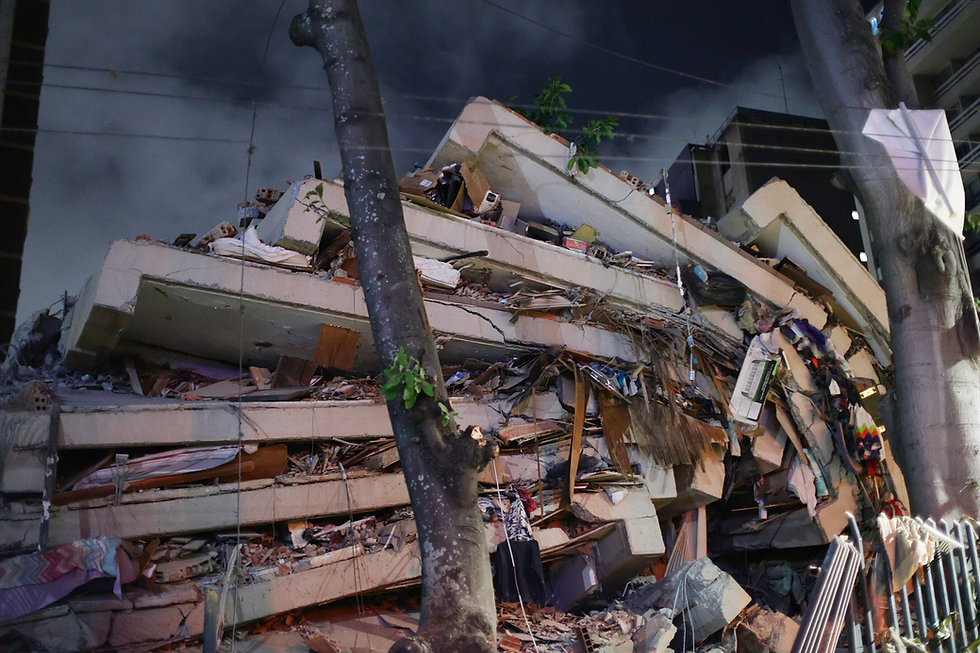
The drone image above was obtained by the NY Times. It shows building damage that resulted from the double earthquake in Venezuela in 2026 that I described in a iprevious blog.. It caused over 3,800 deaths, a figure that will keep rising as more of those unaccounted for are found.
In the image I count 8 for sure, maybe 9 buildings that have fallen. They have all fallen in the same direction, toward the right in the image (I don't know the orientation of the image so I can't say if the direction is N-S or E-W). From the orientation of the collapsed structures you can infer that the orientation of ground shaking was probably left to right rather than top to bottom. The motion is a side-to-side shaking. In the image that means horizontal left/right motion rather than vertical up and down.
What will catch the eye of seismologists and earthquake engineers is that there are buildings that seem to be intact.This is not uncommon in scenes of earthquake damage. Across the street on both sides of the collapse scene are buildings that look to completely undamaged. And all around the site are other mostly shorter buldings that look to be in tact also. How can that be? One thing it cannot be is the nature of the earthquake waves themselves. Seismic energy relesed by an earthquake cannot focus into such a small area.
In the Times article it is said that. the buildings that did not fall were identical to the ones that did. Certainly they look to be about the same height. In fact, the ones that didn't fall look to be taller than the ones that fell. I counted 8 floors in the fallen buildings and 12 in the ones that survived. Accoring to the Times they were all public housing for the poor, built hurridly during Hugo Chaves' rule in Venezuela. Presumably all those buildings were built to the same standards. It's possible that the builings that fell were built more quickly and to a lower standard, but.we have no evidence of that.
My speculation, and it's just that, is the variability of damage might be due to the orientation of the buildings plus important building construction techniques. The two groups of three buidings that survived on either side of the wreckage have their front facade facing inward toward the destroyed buidlings. Their long axis is oriented left to right. The fallen buildings have their facades at 90° to that; they face left. or right. I think they faced left because I think what is exposed is the front facades of those buildings, but I ctan't be sure, the front facade might have been to the right and is now buried. Why would the orientation of the building have anything to do with?
If you want to break down a brick wall you don't shake it from one end , you shakle it back and forth in the middle. Because of their orientation the buildings that collapsed were being shaken back and forth much more that the ones that did survive. that could be part of the reason for the heterogeneous damage pattern.
Another factor may be in play. involes building techniques and materials. It might explain why the taller buildings survived. As is the case in many parts on the world, buildings up to about eight floors are built using reinforced concrete. That's the cheapest quickest way to build. They are at most 8 floors. Any taller and they will collapse under their own weight. Many buldings of this type are liteally on the point of collapse at any time. Those that collapsed had been showing cracks, a prmonition of collapse. They are especially susceptable to collapse if compromises have been made in the quality of the concrete and in the steal reinforcing. Unfortunately this is often the case when the desire is to build quickly and cheaply as was the case with the bulings that collapsed.
To build a taller building you must use a different technioque. It involves steal girders bolted or welded in plate. This contruction method is inherently much stronger than reinforced concrete and allows much taller builings .to be constructed. Sky scapers are built this way. The taller buildings must have been constructed that way and so, despite being taller they were also much stronger. Combined with their orientation with their long axis in the direction of shaking might expalin what you see in the NY Times image.
Every scne of earthquake destruction looks as if the destruction is capricous. A matter of good or bad luck. There is always more to it than that. I hope this has expalined some of the possible reasons for the what is observed.

Comments